Sunday, 12 July 2015

Brownfield sites, Old Oswestry and planning challenges

The problem for archaeology in England is that with the exemption of the Scheduled Monuments the value of archaeology is not really enshrined in law as it is in many other European countries (and actually Scotland, too). The status of archaeology is dependent on planning guidance - and this can be changed with the whim of any government. Relatively recently in 2012 the guidance did change from the Planning Practice Guidance note 16 (PPG16) to the National Planning Policy Framework - together with the government stating that the planning proposals must be accepted if they promote growth and development. This has made opposing not so clever developments - like the ones planned onto the floodplain plus adding to the dire traffic conditions during the rush hour in our village - very difficult. The local councils can just demand restrictions and different work, such as archaeological surveys, trial digs and excavations to be carried out, if required. Not to mention all other kinds of matters related to contamination levels, drainage, local amenities, such as money for school expansion etc. etc.

The Planning Guidance now presents archaeologists with a true challenge in the case of Old Oswestry. In the new Shropshire Council’s Site Allocations and Management of Development (SAMDev) Plan does contain a series of new developments nibbing into the surrounding countryside around this most beautiful of the Iron Age hillforts. In addition, the words 'and their setting' has been quietly dropped from the conditions and statements into the significance of different heritage assets. As we landscape archaeologists know, it is not just the site itself, but its context that is important. The Council for British Archaeology has luckily been stepping in to the campaign to try to keep Old Oswestry and its setting intact, so that the future generations can marvel it without houses a few hundred meters apart. Luckily, the hillfort has many friends such as Rescue.

Another clear threat to archaeology - at least industrial archaeology - is the suggestion of the automatic planning approval for all brownfield site proposals. This was cunningly communicated on a Friday, so any opposing stakeholders could only log in their concern later during the day - or during the night. At least they are not eroding greenfield sites automatically, but with the brownfield sites there is the additional issue of contamination. I just hope that the overstretched planning departments will spot the dangerous levels of industrial chemicals, so one does not end up having whole communities placed on top of rubbish and endangering the future generations. Alongside potentially rubbishing the past.

Sunday, 5 July 2015

Festival of Archaeology in Britain – why not in all countries

If anybody has followed by Facebook sharings, they will know that I quite regularly share items on Syria – for obvious reasons. Little did I know how important archaeology was going to be when I scribed those words back in 2012. However, since my current research is mainly on the northern side of the Mediterranean, I cannot articulate anything any better than has been done just a few days ago in the Conflict Antiquities blog. Read it and spare a thought to those trying to salvage something in very difficult circumstances and propaganda videos a plenty.

Nevertheless, I noted yesterday that the Head of the Council of the British Archaeology tweeted that he will be in Leicester at the University to the regional launch in Leicestershire of the Festival of Archaeology, to go national on July 11. Facing the house looking like a dump and the weekly shop and having to go around with my son, I decided to let the matter be and just try to attend the final open day in the Bradgate Park next weekend, coinciding with the national launch. After being away for much of the early year, I have to give some time to more mundane matters while not knowing what the future holds – even if those floors look actually worse after mopping them!


Rare occasion: Castle Hill open - for the Festival, too?

Nevertheless, the beginning of the Festival got Phil to ask about any Festival in Finland. I had to say that there is no such thing, even if public archaeology is becoming more visible with the events such as the public excavations at Jokiniemi near Helsinki with the Heureka Science Centre, restarted after a long break last year, and at the Kierikki centre in the north. The contemporary research such as the excavations at the last hanging site in Oulu, the activities of the Museums at Tampere or the study of the near past as with the Lapland's Dark Heritage project, revisiting the Lapland war tap to the localised interest. However, archaeology has never been in the common consciousness as in Britain and Time Team was shown on a minor channel. A dedicated archaeology TV series was not a huge success, as far as I have heard.

It is also worth remembering that the number of professional with proper jobs is low, so one cannot expect them to have time to do everything during their working and spare time. I have heard that the enthusiastic hobbyists, such as the metal detectiorists, would like an instant reply – something they have got used to in their online lives and feel slightly disappointed when the thirst of knowledge cannot be fulfilled during the weekend. The numbers of events vary greatly in different counties in Britain, too. Living in Leicestershire and seeing Peter Liddle carrying the can constantly, even if not been employed as a county community archaeologist for ages, and The University department having been invigorated by Richard III gives us a slightly warped view to the situation in Britain.

A Festival of Archaeology in Finland? Perhaps it would help with the sweeping budget cuts that can be predicted to cultural activities...

Sunday, 28 June 2015

Open day at lady Grey’s house

She may have been a queen only for nine days during the 16th century and her home may lay in ruins, but a field school open day in a sunny deer park with fabulous views and picturesque ruined towers makes a wonderful family day out that could have made Lady Jane Grey proud. Phil had already been summoned to see the slates and the bricks on Thursday, but now on a warm Saturday we came the whole family to see the development of the new project and get a glimpse of the structures below the turf.


Find specialists discuss finds and training sessions

What a difference a new park manager makes. Last year, when Phil found a Roman rooftile from the brook in Bradgate Park, the manager was truly interested. The recent start of the Lottery Heritage funded Charnwood Roots project by the Victoria county histories at Leicester meant that the Bradgate House and its environs were a natural location for the Leicester field school to move after many successful years at Borrough Hill Iron Age hillfort on the exactly opposite side of Leicestershire. The first stage of preparations had included a survey of the park and a Lidar prospection from the skies. Thus, the department could target an interesting selection of trenches both inside and outside the House and at other locations.


The trench inside the House

Two posters pinned at several locations detailed the progress so far and the combined results of different surveys, including geophysics. There was a general information tent nearer the main entrance almost next to the ice cream sellers that told about the projects and finds. In addition, there were further activities behind the House ruins with certain aspects of early modern life re-enacted, meant for the general public and the members of the Young Archaeologists’ Club (YAC). There were also guides in finer, upper-class period costumes at the chapel.


We could smell the dung...

For me the true novelty was the realisation that there was a Medieval moated house slightly further away from the main ruins towards Linford Newtown, the village moved from the site of the manor house in the past. I had noticed the humps and bumps, but the slight elevation of a squarish site had escaped me and Phil, since only now the hay and grass has been cut. The park management has also carried out cutting back brambles, so everything is more visible now.


Can you spot the moated site?

There will be further site tours on the 11th of July as part of the Festival of Archaeology and the excavation news are described in real time through Facebook and Twitter. The University web site gives limited information with main communication happening in social media (links provided there).


A trench within the moated site

The excavation site can be approached by foot along the public footpaths across the fields, potentially following a Roman roadline from Anstey where the city buses 74 by First and 54 by Centerbus stop. If anybody wants a lovely walk on a sunny day.


The trench in front of the house

Next year will also see a community dig in Bradgate Park - following after a recent one in Anstey. Stay in tuned.

Sunday, 21 June 2015

Heading online again


Hadrian's wall (photo: wikimedia)

The intensity of the first four months of the year meant that I had very limited time to prepare for my [at least temporary] return to home workwise. In addition, the first twenty days or so I spent using up the reminder of the workshop grant from the Riksbankens Jubileumsfond and was trying to have a head start in rewriting and corrections several articles. I also needed to prepare the poster for the London conference. In reality, I really should have needed a holiday, but I managed to deal with the invoice from Archeologia e calcolatori, plough through other people's drafts for book chapters and write a book review before really starting the rewrites while sending off selected job applications. Then, it was suddenly midsummer.

It was the normal researcher's life: some "we regret..." messages, no name in one grant list and waiting games. And suddenly very good news about the small grants and one medium-sized research grant I had applied during the spring that mean that I will spend a couple of weeks in Italy with a team - at some point(s). Now I just have to drum up more work for the rest of the year and try to sort out different timetables. And wait for November.

In any case, I will put my community and local archaeology hat on again in Britain during the autumn and run the Googling the Earth course in the Institute of Continuing Education at Cambridge again. This will be great fun for me - and hopefully for the students as well. The good part is that it is online, so I can do some other work normally. I will also hear about the many marvellous sites different people are working on and discuss landscapes and online information. What could be better!

Saturday, 13 June 2015

Hoard on show

On a recent trip to Birmingham I could finally see the Staffordshire Hoard with my own eyes. This hoard is remarkable in several different ways. Most importantly, it shows how this can go horribly nicely with metal detector finds, Not only was the find duly reported to the finds liaison officer of the Portable Antiquities Scheme who contacted the county archaeologist who visited and assessed the site shortly after the find. The immense importance of the find was immediately spotted. Not only that but the location was kept secret and the site was properly excavated before the hoard was announced a Treasure at the coroner’s inquest. The Birmingham and Stoke-on-Trent councils agreed to acquire the treasure that was sent to the British Museum to be valued. Grants and record donations from the public guaranteed that the hoard could be placed on show in the Birmingham Museum.

The sad detail is that the Birmingham Archaeology, which excavated the find spot, has since ceased to exist due to its closure by the University of Birmingham. It is sad that commercial activity that effortlessly links to the research efforts of different universities has not been valued recently, but a business that follows the cycles of the building trade can look every now and then less lucrative, but when a unit hits rich, it hits news gold. Nevertheless, now the objects in precious metals are in the safe hands and conserved by the Barbican Research Associates.

Even if the hoard clearly is made up by scrap metal meant to be recycled, the sheer beauty of the Anglo-Saxon art work is breathtaking. I have always admired the inlaid red garnets and gold designs. The most stunning objects are displayed in their own treasury and some items, such as the largest cross, are also reconstructed, due to their original folded and stripped off quality. There is also a partial reconstruction of an Anglo-Saxon house with benches and games as much information as you can give of a find that has apparently been dug into the ground in a forest to be safe. There were practically no archaeological features in the field where the find was made and objects needed to be excavated and lifted with the help of a metal detector. The displays include also some other Anglo-Saxon finds from the area plus a model of a house excavation. The videos of key persons who dealt with the find giving their spoken insights add to the more personal feel.

The hoard is very popular with the visitors. Naturally, we visited during the half-term week, but most of the visitors were couples or groups of friends in their more advanced years. However, the children were avidly using the horizontal touch screen table and playing with the object info. Most visitors seem to pay close attention to different objects and not rush through. Nevertheless, I do not know how popular the Staffordshire Hoard Bath Duck, available in the museum shop, is with the punters but it made me smile.

This is all free and accessible to everyone. The Birmingham Museum and Art Gallery also has a marvellous collection of Pre-Raphaelite Art, which the visitors had to pass on the way to see the hoard. Not that one had to be forced to marvel the beauty of it. Let’s hope that the new government will see the beauty of it, too, and realise that the local government provides culture for everybody. If these riches are lost for the taxpayers, due to the continuous cuts, it would be a huge loss to everybody and deprive the nation of its heritage.

Saturday, 6 June 2015

Academic archaeology to the shredders?

It has been scary to read papers and check the Facebook postings of my colleagues in different European countries. Be it Britain, the Netherlands, Sweden or Finland, the governments seem to be singing from the same song sheet: we need to cut and streamline higher education. It is interesting to compare Britain and Finland, which both have currently conservative governments and both countries try to cut spending in order to cut deficit. Both discussions have some unique and internally contradictory elements.

Naturally, in Britain the different universities are separate from the state, but the government is holding the money meant for teaching undergraduates and research. Or actually, they manage the system and simultaneously try to promote British education system to foreign students, a considerable source of funds for the university system and the country. When the country needs the money from foreign students, the government simultaneously keeps their numbers as part of potentially poisonous immigration statistics and ultimately part of immigration discussion.

Of course, 80% of teaching funding was cut from the Humanities during the last round of structural changes in university funding. The 80% is now supposed to come from the students, i.e., most pay it from their student loans. Thus, if your department can get the students, you may be OK. If you are not a Russell research university and your department is not innovative and famous, you are pretty much stuffed. Universities make increasingly all decisions on the basis of business reasoning, so that is why the King's wanted to get rid of the Classics. That is why the unpopular natural science courses are also closed. That is why modern languages disappear. These developments make one wonder how there will be enough science teachers? How businesses actually think to sell anything abroad in a way that takes into account cultural differences - that can be huge even in Europe? The more 'exotic' humanities are likely to survive only in the most prestigious of institutions. Some people wonder when people dust the 1980s plans for archaeology, when the number of departments was considered to be cut down to five.

The cull of smaller departments and more 'exotic' disciplines is in full swing in Finland. There is actually funding to reward universities for getting rid of 'odd' disciplines. The universities are branding themselves, which is not always bad. The University of Oulu where I am a docent decided to change the lectureship in classical archaeology into one in archaeology and ended up hiring a human osteologist. This is wise, since the department is famous for its osteological and zoological knowhow and the previous professor covered this subdiscipline. Naturally, they need someone teaching the matter. And the arctic emphasis of the university as a whole makes sense, since the Faculty of Humanities has a Sami research institute and it is located in the north. However, the Classical antiquity and Mediterranean studies come with built-in potential international profile - something all universities are after around the world.

My Finnish colleagues have been alarmed by the value statements by different members of the new government. First the finance minister was joking about abolishing the reason professors like their job, June, July and August - the only time the teaching stuff has time to do research. The irony is that without this research the universities do not have peer-reviewed articles in respected international series or books that are the basis of the financial share and funding. There seems to be very little understanding in the government how their own system of academic funding works. In addition, they do not promise any further funding for this new summer term or take into account that in many disciplines, such as in archaeology, students are getting work experience with the employers of their fields and earning desperately needed money to cover extra cost of subsistence. At the same time, the government says that the country has to become innovative. Well, how this is achieved is unclear if there are only one or two large departments in a couple of universities and the departments are in the traditional style led by one professor, so there is a big danger of monoculture developing. Branding makes more sense.

This all happens with a background in regional internal politics. There was a time in Finland where every region wanted its university - these do bring knowledge, skills, activities and jobs to a town. However, it seemed at least to me a bit dubious, if EVERY town needed an identikit university with more of the same. Now that road has come to an end and the institutions are united, departmental staff cut and central administration mushrooming. There are hardly more jobs for the many doctors the system creates. The recently put '10 years since PhD' threshold for much of the research posts does not give directions to people how they are supposed to survive when the lectureships and especially professorships are few. A doctor easily hears that they are overqualified. The hiring culture has to change and the careers in the administration, either at the universities or in governmental bodies have to be better signposted. Otherwise, the danger is that the spiral of cuts does not support job creation or innovation.

A feature of life is the unpredictability. We do not know what will come. Nobody could see that our assyriologists and Palmyra specialists do rounds to explain the situation and relevance of recent events. The current situation in Europe requires people who know from their own experience the Mediterranean world. We can only think of Lampedusa, Turkey, Syria, Libya, Iraq... In this world, cutting from things like the Dutch Institute in Istanbul seems silly. They may be studying the Hittites or the Ottomans, but a physical building means there are people who have been living in the region and there is an institute to hold different collaborative meetings with local colleagues. How can we predict where the innovative ideas come from?

Sunday, 31 May 2015

Blood on ruins


Overview of Palmyra (photo: wikimedia/AZ)

I probably should have written about Palmyra last week as were many of the bloggers I know. Nevertheless, there were other topical events in my archaeological life and now one has seen what has been happening.

It has been busy for the colleagues who are known Middle East experts. Professor Kevin Butcher has been doing rounds in the BBC news, website and radio in UK and Sanna Aro-Valjus has been interviewed in radio, TV and major journals, sending photos on Facebook from the World on a Visit event from Helsinki in Finland where some Syrians had their own stand plus writing her blog. In Sweden various classicists have revisited ruins, Palmyra and other related matters. On the world level, there have been interventions from UNESCO and different seminars and workshops. People are engaging, informing, trying to affect world opinion and to safeguard sites.

In the end, the most interesting thing about the threat to Palmyra (and other sites in Syria and Iraq) is not as much we archaeologists condemn the threats and destruction or what IS, the icon clashers, are actually doing and how they use it to their propaganda. No, it is the kind of attitudes and feelings become expressed and are resurfacing.


Theatre at Palmyra (photo: wikimedia)

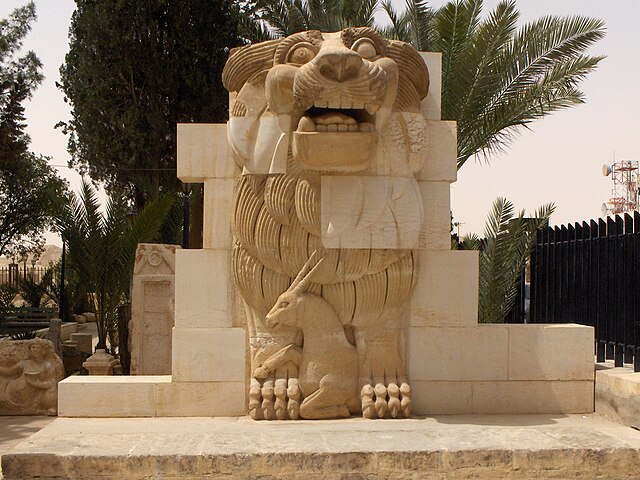
The most difficult ethical dilemma for any archaeologist and heritage professional is the question raised in one Guardian blog: “is saving priceless antiquity as important as saving people?” This is a question we have to be pondering, since it is the one countless minority peoples and the citizens of Palmyra may be asking after the pillaging, rape, murder and beheadings. Apparently, the theatre in Palmyra was used for public executions the city dwellers were forced to witness. Nevertheless, the ruins are essential for the trade and subsistence economy of the town. When there will be peace, the standing ruins will bring the tourists.

It seems to be in a fairytale land far, far away, when I and my future husband were working in Syria and visiting with the rest of the crew Aleppo over one weekend. Some of us were staying in the mythical Byron Hotel, made famous by Agatha Christie, and making leisurely walks around the castle, archaeological museum and city gardens and having a group visit to the Jewish quarter. One of our group hired a big old-fashioned taxi and did a day visit to the ruins. I now wish that in the future we could make the same ride.

Back from the memory lane: the important question came with a chilling request. The coalition forces have to bomb the IS troupes and safe-guard the town and ruins. This brings an additional dilemma for an old peace activist (or at least sympathiser) like me: are the ruins worth killing people for? These people seem to have no mercy or respect for human life, but should we choose the same road – for some stones? Would the bombings have safeguard the citizens in Palmyra? Have they really had any deep effect in the expansion of the Caliphate? In any case, the eagles of the war action now can also refer to world heritage in their backing statements. Clearly, the IS does not let be without a fight, but whose responsibility that fight is and will be?


Funerary relief from Palmyra (photo: wikimedia)

Sadly, I cannot give the ultimate answer – even from my part. It is a complicated issue, but there is probably no true archaeologist whose heart does not bleed for the loss of our common heritage and the possibility for the future generations to understand the past life and be awed by the ruins in their genuine surroundings. The ruins in Syria bring hope of some kind of unity when the country and its countless communities have been thrown apart. Palmyra and other marvellous world heritage sites can bring civic pride to all parties.

The lesser question is the rise of the voices being relieved that at least some of the heritage from Palmyra and other places in the area are in the European and American museums. Nevertheless, the memories are short. It was just about 75 years since most of the European museums were in danger. Still today countries such as Germany and Russia are puzzled or in loggerheads over the collections that have not been found or returned. I can only refer to a certain amber room or Troia objects. Recent news stories have described elderly art hoarders and the return of single art works back to their original Jewish owners or their families. Can European museums take a moral highground? Can we think that we have more right in the west to own the past? Somehow colonial narratives creep back. Nevertheless, the feelings of relief are often genuine in the face of loss. But the future solutions can be more about sharing than exclusivity or giving antiques trade a surface of respectability.


Lion statue, allegedly destroyed, from Palmyra (photo: wikimedia)