Saturday, 2 May 2015

The last days of Stockholm

Similarly to many of the previous arrivals my last return trip to Stockholm of this current researcher contract coincided with some drama. The time the Swedish Mediterranean Institutes were in danger is probably such an unexpected series of events that it will be remembered for a long time – and not just by me. Sadly for me, this time around the drama that was unfolding was not something I observed, affecting other people, but sad, unexpected things happening within my own family. Nevertheless, the sheer enormity of the workload numbed the feelings of loss and the social media uploads and contacts from different family members kept me aware of the events.

The last eight and half working days presented a carefully timetabled flurry of things. There were two major grant applications to sort out, a report to finish, a tax return to log in, workshop material to be sent to the agreed open access journal, Archeologia e calcolatori, to name the most urgent matters with immediate deadlines looming. Luckily, there were also a few good research seminar presentations to hear and a pleasant postseminar in a Greek restaurant - after a talk I did not have time to listen, but even a stressed researcher has to eat... Everything was so intensive that there was little time to panic for the future or let any blue mood set in for long. The things were to be packed, the flat was to be cleaned on the last day and the table was emptied. Anyway, if the first day in the home office was any indication, at least momentarily the workload stays heavy. It also turned out that the last day at work may not have been such a thing. Frugality comes with silver linings apparently and the wolves have been sent packing at least for a couple of weeks.


Virginia Piombo presents Massimo Osanna

The most amazing coincidence was the fact that my last full working day before the Valborgsafton coincided with the talk of Massimo Osanna, the soprintendente of Pompeii. His presentation was the last in the series organised by the Italian Cultural Institute in Stockholm in collaboration with the Lund University and the Millesgården museum in Stockholm, celebrating the occasion of the Pompeii exhibition describing the Swedish Pompeii project. This was the last in the series and sadly the only one I could make. The other talks were at the times when I either was away or frantically finishing off one of the many grant applications. Luckily, much of the digital content had been presented in the CAA conference in Siena by Niccolò dell’Unto, so I had got peaks into the fantastic subject matter.

Professor Osanna stroke me as an energetic and driven man with a modern vision for Pompeii. His talk gave a quick summary of all the phases in the research history of Pompeii, from the 18th century tunnels around the theatre to the main ‘beef’ of the talk, Grande Progetto Pompei, the Great Pompeii Project. Professor Osanna referred to the two allied bombings in August 1943 as the defining moment, the reason for much of the collapses and structural instability in Pompeii. The after-war reconstructions are the ones that keep coming town and risk the survival of the original ruins as well. For the first time in Pompeii’s history the whole Pompeii is being mapped for decay and different structural phases. 105 million euros granted in 2012 allows the maintenance of the entirety of the existing standing structures, the remedies for hydrogeological problems and the systematic restoration work to be in the heart of a Pompeii project. No piecemeal, no half measures.

The plan is extensive and already in full swing. The different sections of the project – Conservation, Usage, Knowledge, Health & safety and Public visits – cover the whole site with 55 projects started and 95 entered into the tendering stage. Naturally, according to the EU regulations the work is divided into the subprojects that are given to different companies through open tendering process to allocate the contracts. Thus, the digitalisation of the photographic archives of Pompeii, to be uploaded to the internet in eight months, is carried out by six different companies. The work plan, specifications and regular visits from a dedicated Pompeii archaeologist keep different subprojects coherent and harmonised. Similarly, all Regios will be surveyed and all signs of decay and different repairs will be mapped on photographs. The whole site perimeter gets new fence, lighting and CCTV cameras, so that the regular night-time visits will cease. The unexcavated areas are cored for hydrogeological and engineering purposes, the Soprintendenza offices will be finally renovated (they have been in temporary barracks since 1980s) and new access routes are created. There will be a series of different thematic round tours so that the tourists will be channelled to different areas to even the erosion and Pompei per tutti will enable disabled access at least to a part of the site.


The plan for the disabled access

Since 2012 there have been 13 more archaeologists and 8 architects to carry out the work after the 2010 collapse of the Scuola Armaturarum. In addition, the internal commercial arm of the Culture Ministry has provided 13 new guards who could help to keep open newly restored houses or spaces where the governance could not allocate guards, not previously opened to the public. One is able to visit Casa del Poeta Tragico, Terme suburbane and 11 other properties in Pompeii. Similarly, the restoration of Casa dei Vettii has been restarted and there are plans for the New School of Pompeii, to teach different archaeological methods and disseminate knowledge after the model of Fiorelli’s original school that opened in 1866.

What is truly amazing that the old policy of restricting the use of Pompeii material online has ceased. The photographic archive will come online and information of Pompeii and different tourist routes are presented in an integrated manner in cross media. This new embrace of open access naturally has also something to do with the European conditions for research and other funding (we all are pencilling our respective open access publication plans), but it is such a positive move. I can only remember the times when a friend could not present online his 360 degree photographic panoramas of the Pompeii house he was working at, since the cost required by the Soprintendenza was beyond any independent researcher’s capability to pay. Probably now the panoramas can be presented – if the technology has not become redundant, yet. Likewise, now it will be much easier for the Expeditio Pompeiana Universitatis Helsingiensis to publish their final report.

As a cherry on the cake, there will be a new exhibition to present the earlier pre-War phases of Pompeii research and excavations. This exhibition will take place in Naples between the end of May and the beginning of November. As Professor said, now it is time to visit Pompeii. The organisers of the RAC, take a note where to direct the archaeological excursion of the conference in March 2016, if in anyway possible. It is the golden dawn the continuation of which is not guaranteed. This is a normal fixed-term project: the extra guards disappear after one year. The maintenance work will be incorporated into the normal running costs after 2017 unless there is new money. Can the finances allow any way near this level of activity in the future? Only time will tell, but I have personally followed the slow decay of the Millennium walkways and outdoor displays at Crustumerium when there was no money for maintenance and the weeds took over. Nevertheless, no one cannot say that soprintendente Osanna does not try to capture the moment and try to sort out the extra finances for guides and maintenance.


Massimo Osanna kindly allowed to use these photos in my blog. Truly practicing the openness that he is preaching.

Sunday, 19 April 2015

Glass ceilings?

After swanning around in lovely conferences (see my postings over the last two weeks), it was time for me to be the one taking over the parenting duties at the end of the Easter holidays in Leicestershire and at the beginning of the new school term. Naturally, in many other counties it was still the Easter holiday and the archaeological conference season was in full flow. I could not travel to Copenhagen to the NTAG where apparently my old friend Jens Ipsen was giving a paper. We have not seen for - oops - it must be almost decades, but the leaves of absence for conferences are reciprocal. My husband has some doubts about my feminist credentials, considering my avoidance of DIY, but I did show solidarity here.

Somehow it was fitting that part of the audience exited Phil's workshop From post excavation to après-feuilles in the Chartered Institute for Archaeology conference in Cardiff last week to attend the Glass ceilings, glass houses, or glass parasols? confronting issues of gender in the archaeological profession session. Looking at the programme he shared on his wall, I really should have been there to hear about Rachel Pope to speak about different issues on sexism, maternal and paternal rights and gendered networking and mentoring as well as Fiona and Ian Grants' paper on parenting as archaeologists with short contracts. It would have been interesting to hear if Menna Bell's paper was truly as positive as her abstract - or if it was just ironic. Nevertheless, these are important issues - not just for women, since men are parents, too.


I have again some time-management issues with deadlines, so if I disappear for a week, be patient, I am just working on archaeology and landscapes!

Saturday, 11 April 2015

Keep the revolution going?

Booking plane tickets well advance is always tricky, since one does not know how the conference programmes are going to pan out, but luckily to me, the CAA 2015 organisers in Siena had put a price tag to all workshops on offer on the first Monday, so using that day for travel did not rob me of anything covered by the relatively hefty conference fee. Since I was going to pay everything else than the conference fee, I was early with my bookings and ended up having proper British Airways flights – that turned out not to be so lucky after all on Good Friday. Nevertheless, the flight to the Pisa airport was pleasant, even if the 3.45 am departure from the coach station from Leicester was anything but. Thus, my transport to Siena was not determined by the quickest travel time or lowest cost, but point-to-point delivery that would make the probability of sleeping past the Empoli station or leaving part of my luggage in a train minimal. And hail my luck, the coach passed my hotel on the way to the Medieval upper town of Siena to the coach station that was only a stone throw away. In addition, my room had a balcony. Some luxury for sleeping after five exhausting weeks churning out grant applications and PowerPoint presentations.

I have lately concentrated on visiting the UK chapter CAAs, so this was the first visit to the main conference for a while. Last year the CAA in Paris clashed with the Nordic TAG where I and Phil had a session, so it was definitely not on the cards. Nevertheless, it seemed that the conference had matured and improved during the years without a visit. This may partly be due to the sheer number of the parallel sessions that at points hit eight. Thus, NOT finding suitable presentations felt impossible. A slight criticism could be directed towards the apparent clumping together similar themes: statistics, laser scanning, networks, GIS and geophysics seemed to happen on the same days, sometimes even at the same time. The former was actually good, since one could create pathways through the days following certain themes, whereas the latter split the audience and created moments when some persons should have replicated themselves in order to perform in different sessions.

This time around I was actually a co-session organiser together with Jorn Seubers from Groningen. We had both worked at Crustumerium and since we were involved in exploring the development of ancient towns and cities in central Italy, both using digital methods, it seemed natural to me to suggest we organize a session that emphasizes how we can explain things after describing and analysing material with different methods. Our session was relatively small, but it turned out to be very pleasant with thought-provoking papers. We also got a nice extra, since the organisers placed Lisa Fischer’s paper on the virtual Williamsburg (18th century AD) in our session. But the models were fabulous and the site in the United States is always worth presenting. In the end, it could stand as an example of a kind of reconstructions and educational material one could prepare, if the evidence was there.

Jorn started with some new information about the surface loss and transformation rates in different parts of the main settlement at Crustumerium and how these related to the surface collections. This was a beautifully argued and presented case study and showed also the usefulness of historic maps. I continued with my lamentably limping paper (at the end of my contract I had to prioritize those grant applications), but I could present new figures of the differences in past agricultural needs in southern and northern Etruria at Veii and Volterra. Then Francesca Fulminante presented the University of Rome Tre group’s work on the network analysis of southern Etruria and Latium Vetus. I knew from the start that this would be the centre piece of the session, but due to a programme change some of the audience arrived too late and could not hear the talk with some new landscape interpreting results.

At the beginning of the second part of the session Mariza Kormann (Sheffield Hallam) presented the structural stress modelling of an Early Bronze Age corridor house at a site in the mainland Peloponnese and she and her group could expand the interpretation to explain the usefulness of this structure. The two last original papers of the session were field project presentations. One of our own, the Stockholm Volterra Project, mainly presenting the field schools the Department ran and Andreas Viberg’s GPR results. The second was a lovely Polish project that has been exploring Gebelein in Egypt now for three years with increasingly varied digital methods. Their presentation had nice pictures, solid preliminary results and clarity.


Martin Millett gives a key note

We were lucky with our session, since Professor Martin Millett (Cambridge) was listening it all through and the latter part was partly witnessed by Professor Gary Lock (Oxford), a co-author of the Greek paper. Our session topic also fitted the themes of Martin Millett's key note speech a day before that suggested that we should answer more why questions with our methods. However, his main message was that we may think too small and should be studying vast areas and not just sites with a variety of digital methods. It is true that the Siena GPR results from Rosellae (Saito et al.), presented in the geophysics (or should I say prospection) session of the British School at Rome, are a step into this direction, but these kinds of projects require funding and means, so they are not necessarily possible for everyone. I also disagree with him that this large scale study is something new in landscape archaeology, perhaps in geophysics, but this view may be the result of me having been taught about the Bronze Age and Medieval field systems and county-wide patterns by the best in British landscape archaeology (I can only bow my head in the memory of Mick Aston). Nevertheless, potential for digital explorations at different scales was more than apparent in the conference.


Rushmeier and Forte on the podium

Generally, I went and listened the key note presentations and picked up potentially useful talks for my own work. Thus, I heard less 3D and rock art and more GIS, statistics and network analysis together with databases and a pinch of UAV droids. Some of the key notes were better than others and I must point especially to Holly Rushmeier’s illuminating paper on the early 3D scanning experiments she was involved in during the distant days of the early noughties. Sadly for her, her microphone was having its own show, but the subject matter lifted the paper above the average. Naturally for me, meeting Nicolò dell’Unto from Lund was enlightening as well.


Dell'Unto and 3D models of excavations

The ultimate lessons of this conference were that the combination of least cost and network analyses seems to have especially strong legs (papers by Mlekuž & Taelman and Slayton et al.) and the attempts in agent-based network modelling (Brughmans) are interesting. Annoyingly, the latter was a bit of a black box presentation, where the model was not thoroughly presented, but we were expected to trust the results. Nevertheless, it shows that at some point I have to spend sometime looking at those agent-based modelling tools in detail. The Ariadne project was visible over many days and their session had some promising papers, including a presentation of zoological open access spreadsheets for Italian protohistory (Trentacoste et al.). The Europe-wide collaboration between Archaeology Data Service and the Centro Nazionale delle Richerche also will give us 3D viewers and other tools (Galeazzi et al.). I also got good tips for my future research (Hermon et al.) and was probably presenting just a tad too loudly my opinion about digital revolution as a paradigm change in archaeology, but I am sure Isto (Huvila et al.) can take it. At least I and my fellow Finn had pleasant discussions in the icebreaker party where we Finns placed ourselves strategically at the end of the evening near the remaining chianti barrels.

Lastly and not the least, the whole conference reminded me why we go to certain conferences. Naturally, to keep up-to-date, but also to see friends and to meet new ones. I spent my last night in Siena having dinner with a group of female scholars either from or with a connection to Leiden. It was a lovely evening and also reminded all of us there that archaeological computing is not only a male domain.

Tuesday, 7 April 2015

TRAC and back

It is funny to be in a conference that is actually in your home town, but your name tag sports the name of another university and another country. On the way to this year’s 25th anniversary Theoretical Roman Archaeology Conference (TRAC) at the University of Leicester I was asked for directions to the Mercure Hotel on Granby Road on New Walk by a conference delegate. I must have a friendly, unthreatening appearance, since I am asked for directions in many different cities across Europe, including some Italians asking me where the busses are going in Rome – as if I knew outside the city centre. Well, in the conference itself my smugness was somewhat grated, when I failed to find the registration. Reading the directions from the web page would have helped immensely.

During the conference I heard many times how the interlopers are taking over. These people were mostly ancient historians, but I did my part as a pre-Roman archaeologist who actually is a prehistorian. In the days when the conference was coming nearer and I actually returned for my son’s two last school days of the term, this became more and more a thorny issue. Phil who had mostly downplayed the programme and considered our less-than-splendid finances suddenly had a change of heart and was somewhat irritated by the fact that the Romanist of the family was not attending. But I have now been crossing frequently the period boundaries and had promised to give a paper, so there was no way back. TRAC coinciding with the end of the school term and Alex’s birthday gave me a little bad conscious when I headed to the wine reception after fetching my son from the school, but sending the Romanist as the representative of the Stockholm University to the TRAC party made that guilt magically disappear. Phil was happy to chat with his colleagues over some pints. Now, let’s see how much beer is needed for explaining my attendance in the RAC/TRAC for the Romanist next year...


Andrew Gardner giving the key note talk

This being an Anniversary TRAC a good chunk of the programme was devoted to presentations that either reflected the current state of the theoretical Roman studies or presented the latest or almost the latest in the study of the Roman world. The key note speaker was Dr Andrew Gardner from the UCL who assessed the recent trends. This presentation gave a fair review of the state of affairs, although there were a couple of places where I dared to have a different opinion. As I noted in my own talk, the period divide in archaeology may affect the literature we read and references we have. I have recently read some of the best work on identity – and it was not in prehistoric or pre-Roman archaeology I tend to follow. I should have read these works earlier. Andrew did not for some reason mention Punic and Greek colonisation and von Dommelen’s key contributions to postcolonial archaeology, who actually has commented on Roman colonisation. He was lamenting that the postcolonial general literature lacks archaeological components and does not discuss much Roman colonisation, even if the nativism and resistance within Roman archaeology have been hot topics. I also noted that he showed the ‘Death of archaeological theory’ book cover during his discussion on the general fragmentation of archaeological theory and a high turnover of ideas. I did sit in the said Theoretical Archaeology Group (TAG) conference session some years ago that book was based on and can assure that it perhaps reflected more the sentiment of the speakers than the true situation. The non-continuation of theoretical ideas probably has more to do with the short funding spans of people who are not Ian Hodders and the need to be original – as Andrew pointed out. In any case, Andrew emphasized the importance of pragmatic theoretical solutions – and who could argue with that.

The main reason of me sitting in the TRAC was hearing the Growth of Rome session. If we are even more specific, it was Tessa Stek’s (Leiden) presentation I wanted to hear more than any of the others. He did not disappoint me who am more than interested in Latin colonisation due to my ongoing research that has its origins in work at Nepi. I heard his presentation more than a year ago in the Frontiers conference in Cambridge and he did add a lot of detail from the Aesernia and Venusia projects. However, my Sunday morning was glorious, since Tessa was among about 15 listeners I had. We had a relatively enthusiastic exchange during the question time and continued our discussion throughout the coffee break. Those 90 minutes alone were worth every penny of the £55 conference fee!

Not that the Growth of Rome – or the other main session on Saturday on public Roman architecture – had been without other highlights. Amy Russell’s (Durham) analysis on gender and spatial experience was enthusiastic and gave new perspectives on where and how women were presented in Rome. And how easily Roman citizens (men) could be upset by female protesting so much so that they lamented it in their classical texts (but did not dare to tell the women). The contrast between the clean Forum and citizens’ space and Basilica Pompeiana with its delicious marble women underlined the difference Amy made in her talk between ‘spaces that make difference’ and those that ‘difference makes’. If the interlopers are like this, we need more of them!

Another gracious female presenter was Penelope Davies (Austin, Texas) who made a very strong argument on the development from conscious avoidance of single sponsor general development plans to the grand plans of Julius Caesar. She also pointed out how concrete and its latest datings made possible the creation of overarching policies. Of other quality contributions in these two sessions, one has to pinpoint Julian Richard’s (Leuven) discussion on the limitations of architectural building type typologies and the resulting avoidance of history and local context of the buildings. Similarly, Saskia Stevens’s (Utrecht) talk on Borderscape suggested that her study will be of importance. Willem Jongman (Groningen) also reminded us that the population in Rome could have kept their energy levels up with olive oil and wine – which were stables of Roman diet during the Imperial times.

It was a pity that Adrian Chadwick’s (‘one degree of separation from every single archaeologist in Britain’) and his colleagues’ coin session was on Sunday morning – not to mention Daan van Helden’s and Rob Witcher’s media session. These I could not attend due to the timing of the general session where my paper Claustra inde portaeque essent was placed. The first session mentioned would have been important from material handling’s point of view and the second would just have been TAG fun. Nevertheless, in the general session David S. Rose’s (Edinburgh) paper on the central places and lieux de mémoire in northern Gaul was truly innovative. If only he changes the central place concept. His talk had nothing to do with core and periphery or Wallerstein. Nice model to check from the conference proceedings.


Leicester and Richard III - in fire sculpture

Some giggles had already been provided in the conference by the fact that we actually decided in the Annual General Meeting that Rome will be the stage for the TRAC next year – even if it is always in the same place with the RAC on the RAC years and the University of Rome “La Sapienza” had already publicized the 2016 TRAC a week or two earlier on the RAC web site. On one hand the numbers of students, self-employed and commercial archaeologists will be down. But on the other it will be Rome. In March. A round of the 25th anniversary beer and wine and a slice of the anniversary cake to that!


More conferencing next week when I will tackle Siena and CAA 2015.

Sunday, 22 March 2015

Bye until Easter?

Yes, there is snow again in Stockholm, so one can have snow and spring flowers in the same places. Anyway, I will be busy over the coming two weeks or so with TRAC and CAA plus it is also time for my son's birthday. I will report from the conferences and share my thoughts on some archaeological matters when I have slightly more time. Now, let me see: should start packing, those grant applications are ready to be sent away, PowerPoint needs doing, report bits from colleague reading etc. etc.

Saturday, 14 March 2015

Terror and trade


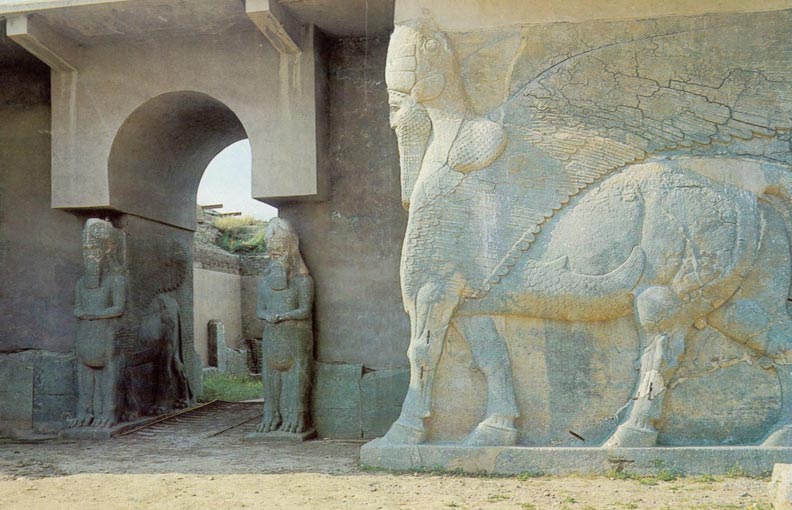
Nimrud as it at least was (photo: Wikimedia)

This week's most important main archaeological news has been the destruction brought by the so-called Islamic State (IS) in the northern Iraq. We have seen lately men with hammers in the museum in Mosul and heard about the demolition of Nimrud and other places. The ancient cemeteries have apparently been pillaged and artefacts sold in order to raise money for the caliphate. Today we have got the news that at least some of the statues may have been modern plaster copies, but not apparently others. In any case, the iconoclasts show no mercy for the people nor their history but try to erase both. As an archaeologist one can only take one stand: against the mindless destruction, prejudice and lack of respect to other people and their past.

Nevertheless, as an individual one feels slightly powerless against the propaganda machinery that tries to fill the enemies with fear. The head of UNESCO has condemned the destruction and Lord Renfrew and others keep the interested audience informed - and have raised the issue long before the hammers reached the tv screens. Locally, in different countries Middle Eastern archaeologists have given interviews and tried to figure out the misinformation and news ducks from the real information dribbling out from Iraq, Syria and Libya. For example, Sanna Aro-Valjus in Finland has raised awareness how illegal antiquities have been used to fund atrocities and Ida Östenberg has revealed how Nimrud was found in the Svenska Dagbladet. However, not all contributions are laudable - and some are downright lamentable and some need to be counteracted by any archaeologist. President and CEO of the Getty Trust has aready earlier made a case against the repatriation of antiquities - his museum is no stranger to the issue of having problems with the provenience of their displayed items. Now he has suggested that UNESCO's policy that secures the right of a country to its patrinomy is the cause to the heritage being at risk. This is taking the awful situation in the Middle East as a hostage to promote own agenda. This kind of 'bandwagonism' does not help heritage.

Taken the complicated situation in the area, a normal archaeologist just does not quite know which side is behind the support sites or how independent and neutral they are, but SAFE and the Syria campaign do exist. In any case, the APAAME project continues to monitor the antiquities in the Middle East from Oxford, and I am sure countless people are scanning through their Goole Earths. It is important for the minorities to know that even if we individuals can do little from our laptops, we can care and try to do little acts of resistance to make people and their past safer. We can read blogs such as the Looting Matters and follow the Chasing Afrodite to stay informed and share the information.

Sunday, 8 March 2015

Peer support

From today, for one week only, in order to celebrate the International Women's Day, my two blogs have the exactly same text


The Eve of the International Women's Day could not have been lovelier than spent dining with my fellow 'Mum abroad' Susanna Niiranen - discussing among other topics blogging, photographing, Jagellonica family, children, Villa Lante, grant applications, husbands and wives, restaurants in Stockholm and everything else any person having a full life experience would do. Generally just having splendid time in one of my favourites, Kvarnen, from where we headed to Gamla Stan (it was just so much easier than to try to navigate the trendy places in Södermalm on a Saturday evening).

As a previous NCT (National Childbirth Trust in UK) branch committee member, I know how important it is to meet people in the same situation and share experiences - no matter how you do the parenting and if you are an earth-mother or a career juggernaut. As Susanna said, so many female blogs are about cooking or fashion or decorating - and much fewer, like Susanna's, about women actually having a career, while also having a family and enjoying cooking every now and then. However, I have decided to split my professional blog separate from my more private blog, since I so have things to say about both spheres, but some of the mummy stuff, such as the dealing with the SEN evaluation, school life and bilingual (well, nowadays functionally monolingual for good reasons) family life, is something I rather share more with my peers - the other parents. I also write about adults in my professional blog with their own names, whereas I do not want to write about the friends of Number One Son or their parents in a similar manner.

Well, I have the traditional one child per a female researcher, but Susanna wonders where are the female professors with more than one child? How could we give more hope for the future generations of women and show that you can be a whole person: both to explore and raise a family? Do we women have to try to create a world where 'lattepappor' stare at us in awe and iron our shirts to mirror the one we observe in certain corners? Or do we try to create something truly more equal? The estimates for Sweden to reach gender equality in different aspects of work and family life run between 11 to 125 years, so we will have a lot to do. Happy International Women's Day!

PS. To celebrate, in a more professional manner, do visit the British Women Archaeologists website and follow the Trowelblazers, the stories of those talented and wonderful women who dug it before us.